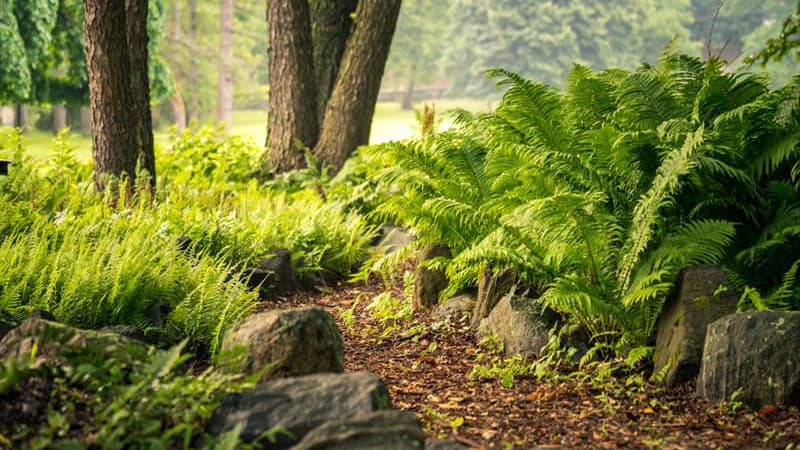
The Overlook Garden
The Overlook & Garden at Lyndhurst is a pollinator-friendly garden full of low-maintenance native plants, including flowering shrubs and perennials, and ornamental grasses. Designed by Hudson Valley landscape artist Paula Hayes, it forms a circular pattern, a mandala of plants, around the newly recreated Overlook platform.
Mandalas often represent unity, harmony, and a sense of connection. The individual beds in the garden – Swaths of tall grasses that evoke a strong sense of movement and groupings of colorful flowers – will evolve over time and merge into a meadow. While akin to the wilder style of garden design today, this design supports the 19th-century gardening principles of Helen Gould, an avid naturalist whose library included books on ornithology, native trees, and beneficial insects. Helen’s additions to the Lyndhurst landscape included flowering shrubs and extensive perennial beds. Today, the Overlook & Garden, at the site of her former treehouse, is an example of the evolution of the American landscape and our need to evolve with it, via biodiverse plantings and sustainable landscaping practices, as the environment changes. Standing atop the platform, visitors are surrounded by plants that are beneficial to bees, insects, and birds, and remind us of the joys of connecting with nature.
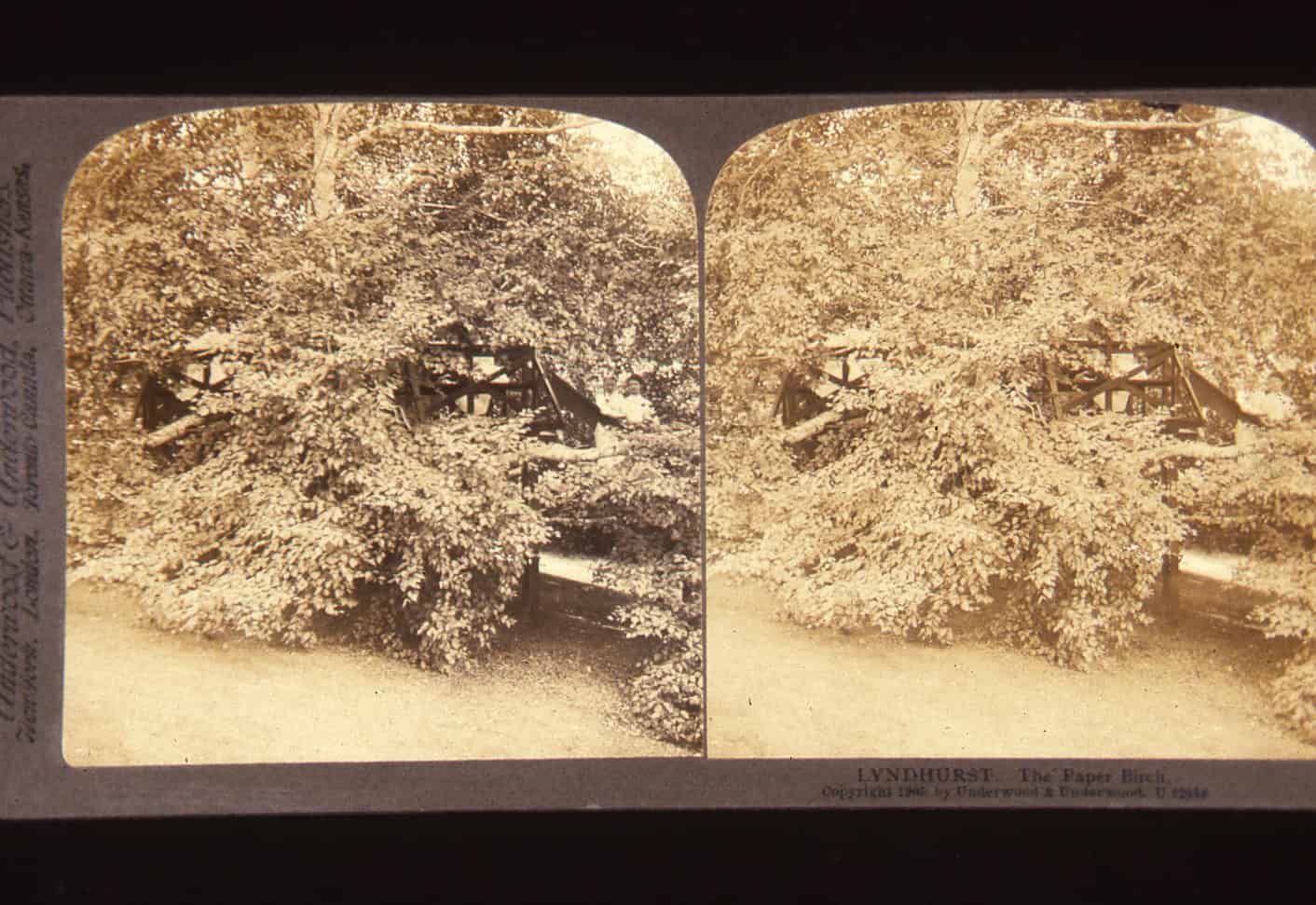
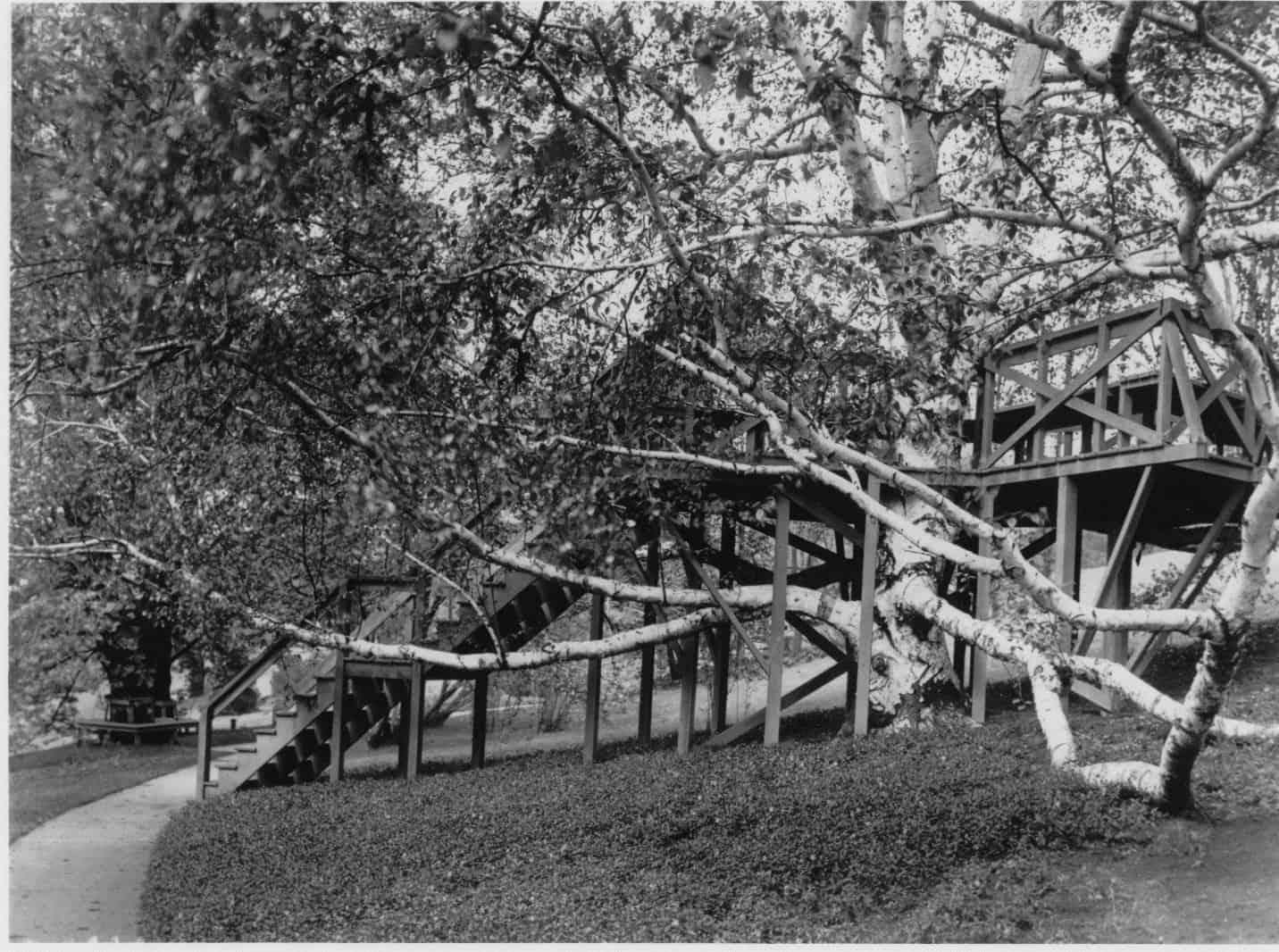
Today, the Overlook & Garden is a recreation of the original treehouse deck Helen Gould built as a landscape feature that complemented the shady rockeries installed by the Merritt family and that vanished from the landscape in the 1960s. It was initially situated around a weeping European white birch tree that could not be replanted due to climate change. Today, the Overlook garden is filled with native plants that support pollinators and evoke the feeling of being enveloped by nature. This recreation is based on historic photographs and on archeological evidence revealing the original location of the birch, supports for the steps, and the original cement step, still in the ground.
Eventually, a tree will be planted nearby as we continue to fill in the plantings and re-create the shady garden pathways.
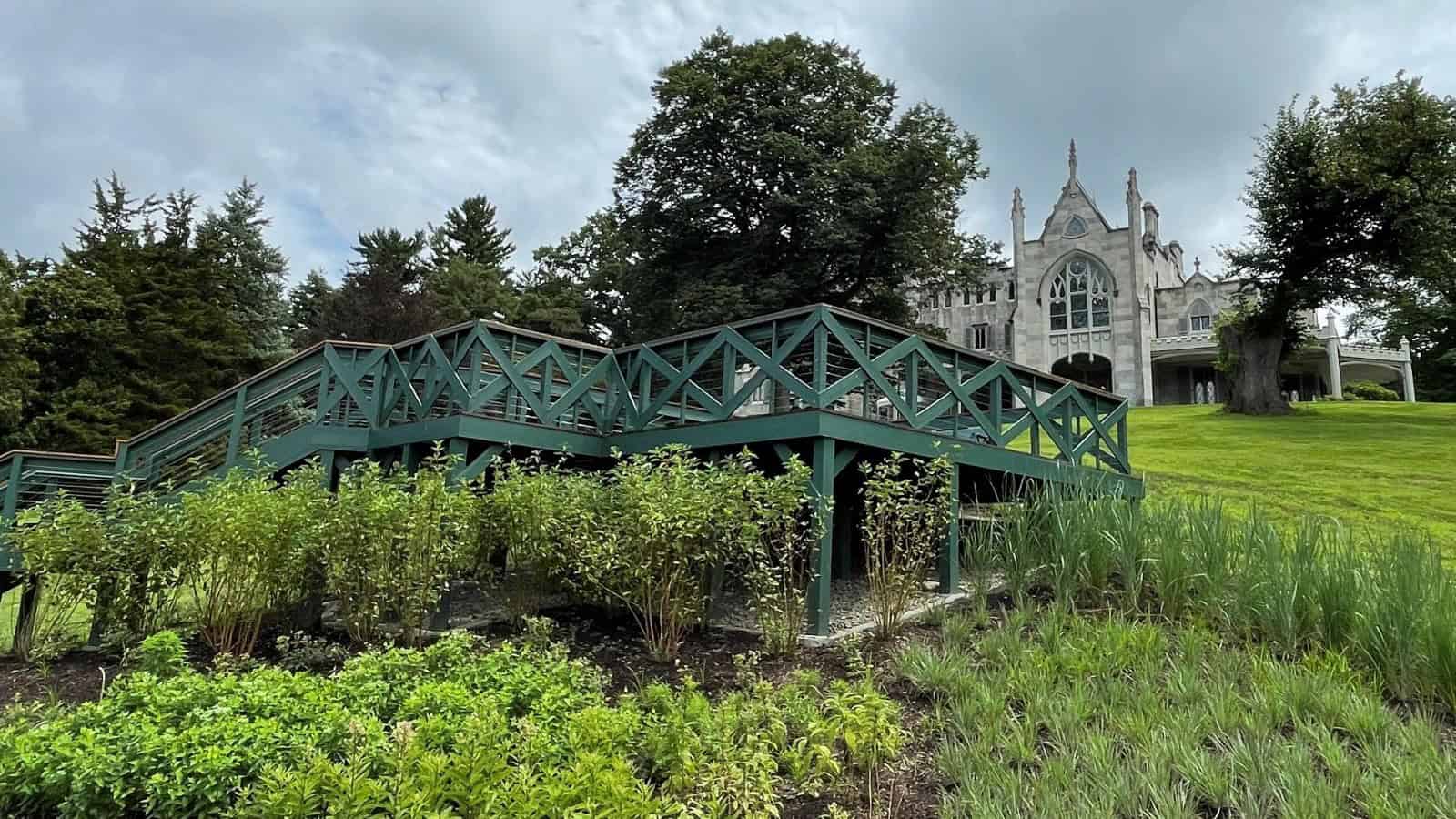
In 1892, Helen Gould assumed ownership of Lyndhurst after her father, Jay Gould, died. During the stewardship of her beloved family home, she added additional buildings and amenities to the estate grounds, including the Kennel Building, Bowling Alley, Laundry Building, Pool Building, Rose Garden, and Fern Garden. These are all still standing today on the grounds.
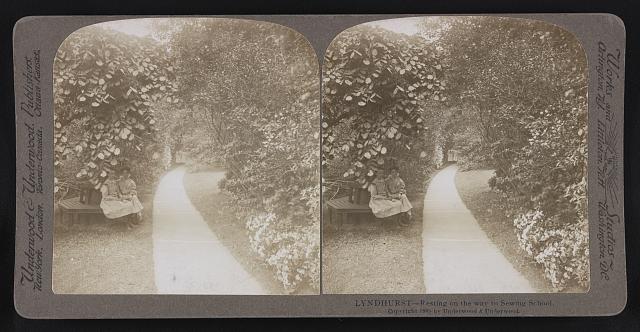
Just off the back of the mansion to the west, Helen also had what is referred to as a treehouse, but was in actuality a large raised deck built around a large European white birch tree. Not much information survives about the treehouse and its conception, aside from photos of it shrouded in branches, but it is believed to have been built around 1905 as part of a picturesque landscape first introduced in the 1860s by the Merritt Family that included shrubbery tunnels, shaded seating areas, plant borders, and vistas of the Hudson River. This pathway started at the mansion veranda and led down to the bowling alley, built in 1894.
After Helen’s death in 1930, the treehouse fell into disrepair and was removed from the landscape sometime in the 1960s, around the same time that the walkways were removed as the site was being organized to become a museum.
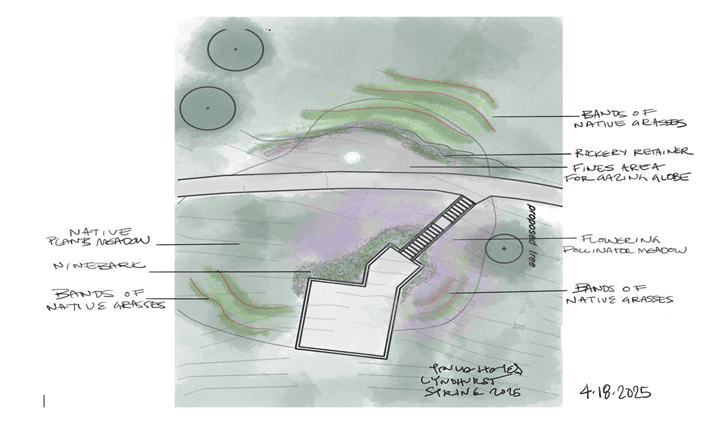
Today’s landscape and climate are very different from those in Helen Gould’s time in the early 20th century. A decision was made to create a new, magical landscape that connected the overlook to nature in a way that was both historic and contemporary. Land artist and sculptor Paula Hayes designed a pollinator garden using native plants and grasses that were advertised for sale in the early 20th-century garden supply catalogs in Lyndhurst’s collection. Hayes added contemporary garden sculptures: a birdbath, a gazing ball, and a garden gnome that reference Victorian garden decorating traditions.
These plants provide habitat and nourishment for the birds, bees, and small animals that abound on the property. The bands of grasses and plants loosely form a mandala centered on the gazing ball, best viewed from the overlook’s elevated perspective.
LYNDHURST OVERLOOK PLANT LIST
Planted spring 2025
* Present in 1905 gardening catalog (Greer’s) in Lyndhurst archives
UPPER LANDSCAPE:
Meadow grasses
Bouteloua gracilis ‘Blonde Ambition/Side oats grama ‘Blonde Ambition’
Panicum virgatum ‘Northwind’/’Northwind’ Switchgrass
Schizacyrium scoparium ‘Standing Ovation’/ ‘Standing Ovation’ Little Bluestem
Native Pollinator Garden
*Amsonia tabernaemontana ‘Montana’/Eastern Bluestar
*Asclepia tuberosa/Butterfly weed
Euthamia graminifolia/Flat-top goldenrod
Eutrochium fistulosum/Joe Pye weed (Different type of Joe Pye, Eupatorium purpureum, appears in 1905 catalog)
Eutrochium dubium ‘Baby Joe’/Baby Joe Pye weed
Eupatorium perfoliatum/American boneset (Eupatorium purpureum/Joe pye appears in 1905 catalog)
Monarda bradburiana/Eastern beebalm
*Monarda fistulosa/Wild bergamot
Pycanthemum muticum/Mountain mint
Solidago rugosa ‘Fireworks’/Rough goldenrod (Solidago canadensis in 1905 gardening catalog)
Shrubs
*Cornus sericea ‘Baileyi’/Bailey’s Red twig dogwood
Fothergilla gardenia/Dwarf Fothergilla
Hypericum prolificum/Shrubby St. John’s wort (Another variety of Hypericum appears in 1905 gardening catalog)
Ilex verticillata/Winterberry holly